Classic Shoyu Ramen with Homemade Tare and Chashu Pork
本格醤油ラーメン — 自家製タレとチャーシュー

March 26, 2026
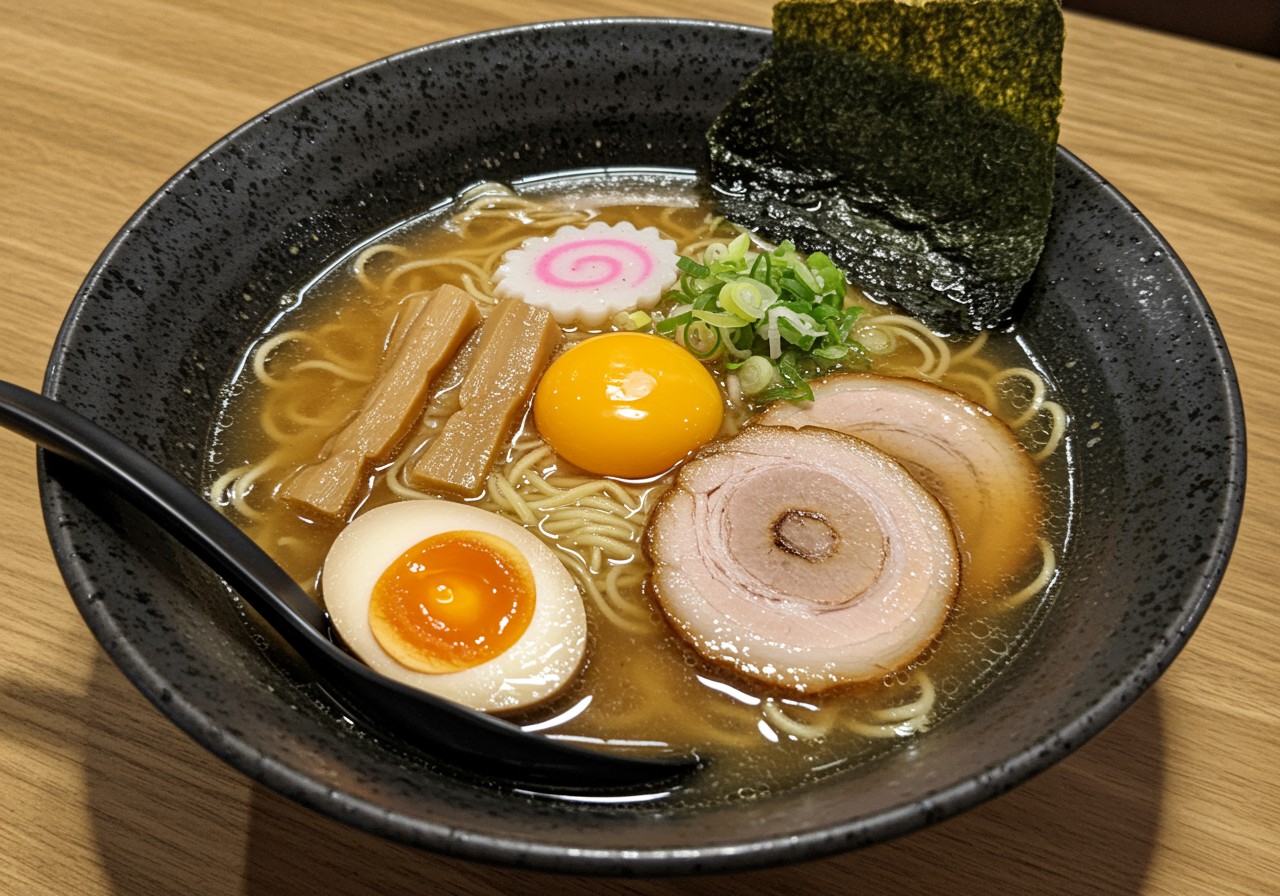
A deeply satisfying bowl of shoyu ramen built from three essential layers: a rich chicken and pork bone broth simmered for hours, a concentrated soy-based tare that delivers umami in every sip, and thin wavy noodles that cling to every drop of soup. Crowned with melt-in-your-mouth chashu pork, a jammy soft-boiled egg, crisp nori, and a tangle of fresh scallions, this is the bowl that made ramen Japan's most beloved comfort food.
Instructions
- 1
Start the broth the day before or early morning. Place 1kg of chicken carcasses and 500g of pork neck bones in a large stockpot and cover with cold water. Bring to a rolling boil for 5 minutes, then drain and rinse each bone under cold running water, scrubbing away any dark residue. This blanching step removes impurities and ensures your final broth will be clear and clean-tasting rather than murky.
- 2
Return the blanched bones to a clean pot and add 4 liters of fresh cold water. Add one halved onion (skin on for color), a 5cm piece of crushed ginger, 5 smashed garlic cloves, and one large leek cut in half. Bring to a gentle simmer — never a full boil — and maintain this for 4-6 hours. A rolling boil makes the broth cloudy; a patient simmer keeps it golden and translucent.
- 3
While the broth simmers, prepare the chashu. Take a 500g piece of pork belly, roll it tightly into a cylinder, and tie with kitchen twine at 2cm intervals. Sear the roll in a hot pan with a little oil until golden brown on all sides — about 6 minutes total. This Maillard reaction creates a caramelized crust that adds depth to both the pork and the braising liquid.
- 4
Transfer the seared pork to a saucepan. Add 200ml soy sauce, 200ml mirin, 100ml sake, 50ml water, 2 tablespoons sugar, 3 smashed garlic cloves, and a 3cm piece of sliced ginger. Bring to a boil, reduce to the lowest simmer, cover with a drop lid (otoshibuta) or parchment paper, and braise for 2-3 hours until the pork is fork-tender but still holds its shape. Turn the pork every 30 minutes for even coloring.
- 5
Prepare the tare (seasoning concentrate) which is the soul of any ramen. In a small saucepan, combine 150ml dark soy sauce, 50ml light soy sauce, 2 tablespoons mirin, 1 tablespoon sake, a 5cm square of kombu, and a small handful of dried katsuobushi. Heat gently until just below simmering — about 70°C — and hold for 15 minutes. Strain out the solids. This double-soy technique gives complexity — the dark soy for color and depth, the light for bright salinity.
- 6
Make the ajitama (marinated soft-boiled eggs). Bring water to a boil, gently lower 4 refrigerator-cold eggs using a slotted spoon, and cook for exactly 6 minutes and 30 seconds for a perfectly jammy yolk. Immediately transfer to an ice bath for 5 minutes. Peel carefully and submerge in a mix of 100ml soy sauce, 100ml mirin, and 100ml water. Marinate for at least 4 hours, ideally overnight, turning occasionally.
- 7
After 4-6 hours, strain the broth through a fine-mesh sieve lined with cheesecloth. You should have about 2.5-3 liters of golden, aromatic stock. Discard the solids. Skim any surface fat — or reserve a few tablespoons to add back for richness. Season with 1 teaspoon of salt. The broth itself should taste good but mild; the tare will provide the punch.
- 8
Prepare the aromatic oil (kaeshi abura). Heat 3 tablespoons of neutral oil in a small pan, add 2 minced garlic cloves and a tablespoon of sesame oil. Cook on low heat until the garlic is just golden and fragrant — about 2 minutes. This flavored oil adds another layer of aroma that hits you the moment the bowl arrives.
- 9
Prepare your toppings: slice the chashu into 5mm rounds — you should get 8-10 beautiful spiraled slices. Cut the ajitama in half to reveal the golden jammy center. Slice 2 scallions thinly on a diagonal. Cut nori sheets in half. Prepare a small mound of menma (seasoned bamboo shoots) if available.
- 10
Cook the noodles. Bring a large pot of water to a vigorous boil — separate from your broth. Use fresh thin wavy ramen noodles (chijire-men), about 130g per serving. Cook for 60-90 seconds only, stirring immediately after dropping them in to prevent clumping. Fresh ramen noodles cook much faster than dried — taste one to check. They should be firm with a slight chew (al dente).
- 11
Assemble each bowl with precision — this is where ramen becomes art. Place 2 tablespoons of tare in the bottom of each warmed bowl. Add 1 tablespoon of aromatic oil. Ladle in 350-400ml of hot broth and stir to dissolve the tare completely. The broth should transform from pale gold to a deep amber. Taste and adjust — add more tare for salt, more broth to dilute.
- 12
Drain the noodles thoroughly — shake the strainer 3-4 times to remove every drop of water, as excess water dilutes your carefully crafted broth. Place the noodles into the center of the bowl. Use chopsticks to gently fold and arrange them so they sit in a neat mound rather than a tangled mess.
- 13
Arrange the toppings with care. Fan 2-3 slices of chashu along one side of the bowl. Place the halved ajitama next to them, yolk side up so the golden center is visible. Stand a piece of nori upright, half-submerged in the broth so it stays crisp. Add a small pile of menma and scatter the sliced scallions across the top.
- 14
Serve immediately while everything is piping hot. The nori should still be crisp, the egg yolk should be cool against the hot broth, and the first slurp of noodles should bring broth, tare, and aromatic oil together in one harmonious bite. In Japan, ramen is eaten quickly — the noodles continue to absorb broth and will lose their texture within 5 minutes. Slurping is not just acceptable, it's essential — it aerates the broth and enhances the flavor.
林 明美 · Recipe Creator
Born in Yokohama, raised between Tokyo and San Francisco. I test every recipe in my own kitchen and share the techniques my grandmother taught me — because Japanese home cooking should be accessible to everyone.